
Snap-in Dentures in Waltham, MA
Traditional dentures can restore a complete smile, but some patients become frustrated when their denture shifts during meals, feels less secure while speaking, or requires adhesive to remain comfortable. Snap-in dentures offer another option by combining a removable denture with the added stability of dental implants.
Snap-in Dentures
At KoKo Dental Care in Waltham, MA, snap-in dentures can be considered as part of a personalized tooth replacement plan for patients who are missing many or all of their teeth. Dental implants are placed in the jaw to create secure attachment points, and a specially designed denture connects to those implants for improved retention.
The result is still removable, which makes daily cleaning convenient, but the implant attachments can help the denture feel more secure during everyday activities.
What Are Snap-in Dentures?
Snap-in dentures are removable dental prostheses that attach to dental implants. They may also be called implant-retained dentures or implant-supported overdentures.
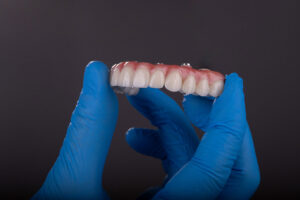
Specialized attachments are connected to implants placed in the jaw. Matching components within the denture connect to those attachments. When the denture is seated correctly, it locks or snaps into position.
Unlike a fixed implant bridge, snap-in dentures are designed to be removed by the patient. They can generally be taken out for cleaning and then reattached to the implants.
This combination of implant support and removability makes snap-in dentures an appealing option for patients who want greater stability than traditional dentures but prefer an appliance they can remove themselves.
How Snap-in Dentures Differ From Traditional Dentures
Traditional dentures sit on top of the gums and rely on the shape of the mouth, suction, muscle control, and sometimes denture adhesive for retention. They can be an effective way to replace missing teeth, but the fit may change as the gums and jawbone change over time.
Snap-in dentures receive additional support from dental implants. Instead of relying entirely on the gum tissue to resist movement, the denture connects to stable attachment points within the mouth.
This can help reduce rocking or shifting, particularly with lower dentures that sometimes have less natural suction than upper dentures.
Even though snap-in dentures are more secure, they still need to be removed and cleaned according to the dentist’s instructions.
Who May Benefit From Snap-in Dentures?
Snap-in dentures may be considered for patients who are missing most or all teeth in the upper arch, lower arch, or both. They may also be an option for people who currently wear traditional dentures and want additional stability.
You may want to ask about snap-in dentures if you experience:
- A denture that moves while chewing
- Difficulty speaking confidently because of denture movement
- Frequent reliance on denture adhesive
- Sore spots caused by denture movement
- Difficulty keeping a lower denture stable
- Concerns about eating certain foods
- A desire for implant support while keeping a removable restoration
Dental implants require adequate bone and healthy supporting tissues, so a clinical examination and imaging are necessary before candidacy can be determined.
The Snap-in Denture Treatment Process
Treatment begins with an evaluation of your mouth, gums, jawbone, bite, and existing teeth. If you already wear a denture, it can also be evaluated for fit, function, and the concerns you would like to improve.
Imaging allows the dental team to evaluate bone support and identify potential positions for dental implants. The number of implants recommended can vary based on the arch being treated, anatomy, desired stability, and restorative plan.
If implants are placed, healing time is generally needed before the implants can fully support the snap-in denture. A temporary or existing denture may sometimes be used during this stage depending on the treatment plan.
Once the implants have healed appropriately, the denture is fitted with components that connect to the implant attachments. The team then evaluates retention, comfort, appearance, bite, and speech.
Follow-up adjustments may be necessary as you become accustomed to inserting, removing, and using the new denture.
Benefits of Snap-in Dentures
- Increased stability: Dental implant attachments help reduce unwanted denture movement.
- Greater chewing confidence: A more secure denture may make eating feel more predictable and comfortable.
- Improved speaking comfort: Reduced movement can help patients feel more confident during conversations.
- Removable design: Patients can remove the denture for direct access during cleaning.
- Reduced reliance on denture adhesive: Implant attachments provide retention that does not depend entirely on adhesive.
- Natural-looking appearance: The denture can be designed with customized tooth shapes, shades, and gum-colored materials.
- Implant support without an implant for every tooth: Several implants can support a denture replacing an entire arch.
- An alternative between traditional dentures and fixed implant teeth: Snap-in dentures combine implant stability with the convenience of removability.
Snap-in Dentures vs. Fixed Implant Teeth
The biggest difference is removability. Snap-in dentures are intended to be removed by the patient. Fixed implant restorations, such as many All-on-X and All-on-4 restorations, remain attached to the implants and are typically removed only by a dental professional when necessary.
Some patients prefer snap-in dentures because they can clean the denture outside the mouth and directly clean around the implant attachments. Others prefer the feeling of a fixed restoration that stays in place continuously.
Cost, available bone, number of implants, cleaning ability, restorative space, personal expectations, and long-term maintenance all contribute to deciding which option may be more appropriate.
Snap-in Dentures vs. All-on-4
Both options can replace an entire arch and use dental implants for support, but the prosthetic design is different.
A snap-in denture is removable and connects to implant attachments. An All-on-4 restoration is generally a fixed bridge supported by four strategically positioned implants.
The right option is not determined simply by which sounds more advanced. Some patients prefer the ease of removing a snap-in denture for cleaning. Other patients strongly prefer fixed teeth. The condition of the jaw and gums may also make one approach more appropriate than another.
Eating With Snap-in Dentures
Any new denture requires an adjustment period. Patients may begin with softer foods and gradually introduce different textures as they become comfortable chewing.
The implant attachments help reduce movement, which can make chewing feel more controlled than it does with a loose traditional denture. However, replacement teeth are still different from natural teeth, and very hard or sticky foods may require caution.
The dental team can provide individualized eating recommendations after treatment based on the design of your denture and the stage of implant healing.
Speaking With Snap-in Dentures
Denture movement can sometimes make pronunciation feel difficult. Because snap-in dentures are anchored to implants, improved stability may make speech feel more predictable.
There can still be an adjustment period as the tongue and lips become familiar with the shape of the new appliance. Reading aloud and practicing difficult sounds can help some patients adapt more quickly.
If speech continues to feel unusual, the denture can be evaluated to determine whether its position, thickness, or bite requires adjustment.
Cleaning Snap-in Dentures
Good hygiene is essential for both the denture and the dental implants that support it. The denture should be removed and cleaned according to the instructions provided by your dental team.
It is also important to clean the gums, tongue, implant attachments, and areas around each implant. A soft toothbrush, specialized brushes, water flosser, or other tools may be recommended.
Denture cleansers should be appropriate for the material used in the appliance, and hot water should generally be avoided because excessive heat can distort some denture materials.
Professional maintenance appointments are equally important. The dental team can clean difficult areas, evaluate the implants, inspect the attachments, and determine whether components need adjustment or replacement.
Do Snap-in Denture Attachments Wear Out?
The attachment components that create the snap or retention can wear with repeated use. When this happens, the denture may begin to feel less secure than it did originally.
These components can often be replaced as part of routine maintenance. The denture itself may also require adjustments over time as the mouth changes.
Planning for periodic maintenance is an important part of owning an implant-supported removable denture.
Can My Current Denture Be Converted Into a Snap-in Denture?
In certain situations, an existing denture may potentially be modified to work with implant attachments, but this depends on its fit, condition, age, strength, bite, and design.
In other situations, creating a new denture specifically designed around the implant system may provide a more predictable result.
The dental team can evaluate your existing appliance and explain whether modification or replacement is more appropriate.
Why Choose KoKo Dental Care for Snap-in Dentures in Waltham?
Patients considering implant-supported dentures often have several choices, and understanding the practical differences is important. KoKo Dental Care can help you compare traditional dentures, snap-in dentures, fixed implant-supported teeth, All-on-4, All-on-X, and other restorative possibilities according to your individual needs.
The process begins with evaluating your oral health and discussing what you want to improve. For one patient, the priority may be better chewing. Another may be most concerned with denture movement during conversation. Someone else may want to avoid adhesives or find an option that is easy to remove for cleaning.
Understanding these priorities allows treatment planning to focus on the aspects of your daily life that matter most.
Enjoy a More Secure Denture
A denture should help you enjoy your smile rather than make you worry about movement every time you eat, speak, or laugh. Snap-in dentures combine the convenience of a removable appliance with the added stability of dental implants, creating an option that may offer greater confidence throughout the day. To find out whether implant-supported snap-in dentures are right for you, call KoKo Dental Care in Waltham, MA at (781) 810-4661 and request your denture and dental implant consultation.
-
Do snap-in dentures stay in place while eating?
Snap-in dentures connect to dental implants, which provide greater retention than a traditional denture resting only on the gums. They are still removable appliances, but the implant attachments help reduce movement.
-
Can I remove snap-in dentures myself?
Yes. Snap-in dentures are generally designed so the patient can remove and replace them for cleaning.
-
How many implants are needed for snap-in dentures?
The number varies according to the arch being treated, anatomy, available bone, desired stability, and the specific attachment system. Your dentist will recommend an individualized plan.
-
Do snap-in dentures require adhesive?
Implant attachments provide retention, so many patients are able to reduce or eliminate reliance on traditional denture adhesive. Individual circumstances can vary.
-
Can I sleep in snap-in dentures?
Your dental team will provide instructions based on the design of your restoration and oral health. Many removable dentures are taken out for part of the day or overnight so the mouth can be cleaned thoroughly.
-
Are snap-in dentures permanent?
The implants are intended as long-term anchors, while the denture and attachment components require ongoing maintenance and may eventually need repair, adjustment, or replacement.